

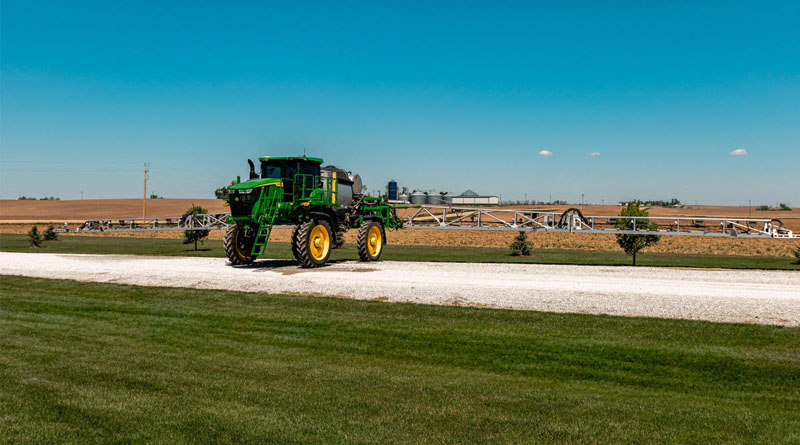
A conventional spraying pass treats an area according to a planned programme. A targeted system adds another decision during that pass: whether the material in front of a particular nozzle needs the treatment being applied. Making that distinction reliably requires cameras, software and the physical delivery system to work together while the machine moves through a changing field.
Detection and delivery in the same operation
Greeneye is establishing a North American headquarters in Kansas as it expands its retrofit precision-spraying business. Its system combines a broadcast residual application with camera-directed treatment through separate lines. The company says its systems covered more than 500,000 acres and achieved an average 81% reduction in non-residual herbicide use compared with conventional broadcasting. Those figures describe the company’s operating results rather than a guaranteed outcome for another field.
The distinction between the two applications matters when interpreting a savings claim. Reducing a targeted component does not necessarily mean that every part of a crop-protection programme falls by the same percentage. A grower needs to understand which material is being measured, what the comparison includes and how the system fits the rest of the field’s management.
The camera is one part of a moving system
Identifying a weed is not the final step. The decision must reach the relevant nozzle at the right point in the machine’s movement, and the application equipment must respond as intended. Speed, visibility and the crop environment can influence the working system. Evaluating detection alone leaves out the practical link between an image and a treatment placed on the ground.
A retrofit also has to fit the existing machine. Installation, maintenance access and compatibility with the farm’s operating procedures affect how easily the technology can be used. The attraction of keeping an established sprayer is strongest when the added system preserves a workable routine rather than creating a separate layer of troubleshooting that operators cannot readily manage.
Measure what changes on the farm
A useful field evaluation looks at more than total material use. It also considers the consistency of weed control, the time needed to complete work and the circumstances under which performance changes. Keeping a clear comparison helps the farm decide whether the system’s benefit comes from reduced treatment, improved targeting or a different way of organising the operation.
The level and distribution of weed pressure are important parts of that comparison. Two fields receiving the same programme may offer very different opportunities for targeted application. A farm should therefore examine its own records rather than assuming that a result achieved across a larger fleet will appear unchanged in each individual field.
Using application records beyond one pass
A targeted system can create information about what was detected and where treatment occurred. If those records are retained in an understandable form, they can support later investigation of problem areas and changes between visits. Their usefulness depends on the connection between detection, application and location remaining clear rather than being reduced to a single total for the day.
Precision spraying is therefore both an equipment decision and an information decision. Cameras make selective treatment possible; a dependable physical system makes it operational. Careful comparison and usable records show whether that combination has earned a place in the farm’s crop-protection workflow.
