

A sandy field can receive plenty of irrigation and still leave plants struggling for water. The problem is often what happens after the water reaches the ground. If it moves quickly below the roots, a grower must irrigate again even though the field has already received a substantial amount. Improving the soil’s ability to hold that water changes the starting point for every subsequent irrigation decision.
Working on the soil, not just the irrigation system
Desert Control’s liquid clay technology addresses that challenge by introducing clay into sandy ground. A mixture of clay and water moves into the soil, where the clay changes how the treated material retains moisture. The objective is to give crops a more useful reservoir around their roots instead of relying entirely on frequent applications of water.
That distinction matters. A better pump, a more accurate timer or a well-maintained drip line can improve delivery, but delivery alone does not determine how long water remains available. The soil and the irrigation system work together. A change to one can alter what is needed from the other.
Finding the balance in the root zone
The treatment needs to match the ground receiving it. Adding clay is not simply a matter of using as much as possible: the intended result is a useful balance between water retention, drainage and the conditions roots need to develop. Desert Control has described reductions in water use of up to 47%, but a figure from a trial should not become an automatic irrigation target for every field.
A practical starting point is to understand the existing soil profile. The top layer can look dry while moisture remains farther down, or look wet immediately after irrigation while the deeper root zone receives little benefit. Measurements at more than one depth help separate those situations. They also make it easier to see whether a change in irrigation actually reaches the part of the soil used by the crop.
Making a field comparison useful
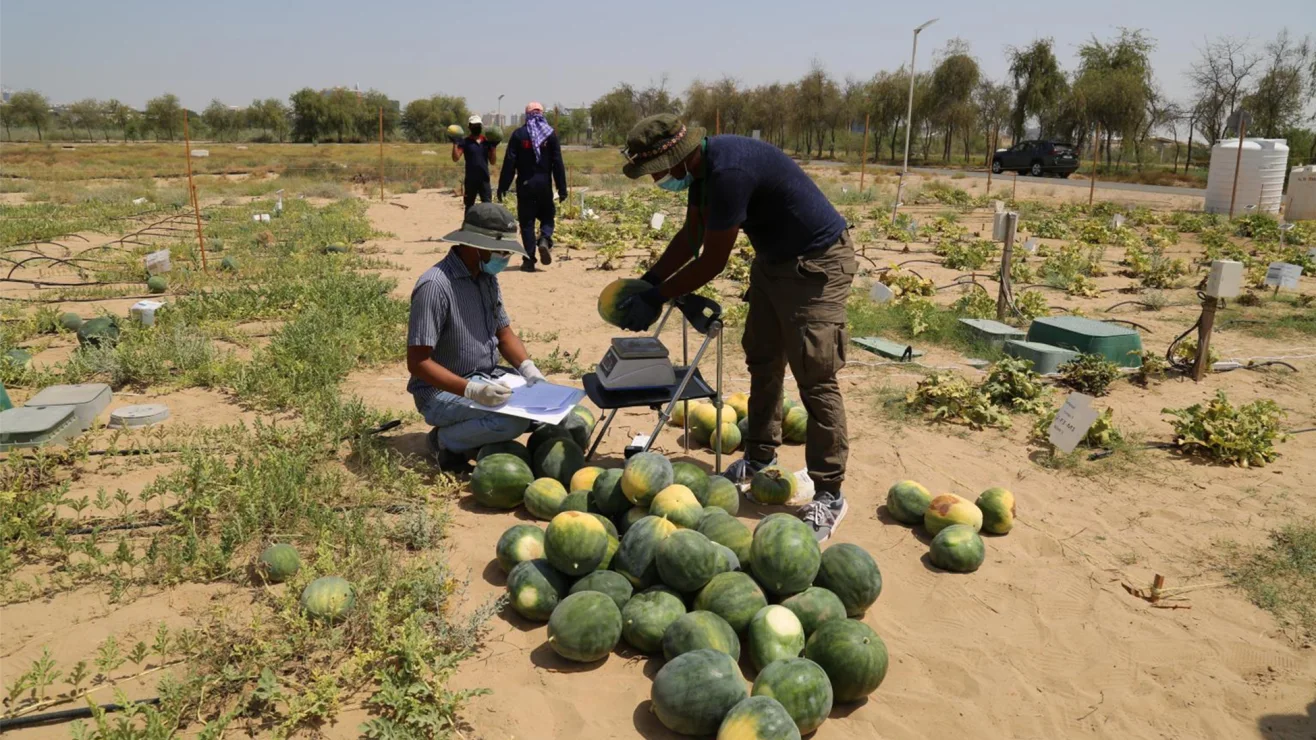
A convincing evaluation needs a reference. Where possible, compare treated and untreated areas growing the same crop under similar conditions. Record how much water each receives, how soil moisture changes between irrigations and what happens to crop growth and harvests. A photograph can show that plants are growing; a consistent record is needed to explain the result.
Those observations should guide gradual adjustments. Continuing an old irrigation schedule after changing the soil may overlook the benefit of greater retention. Cutting water too aggressively creates a different problem. The useful question is how to maintain suitable conditions for the crop with less waste, rather than how to reach a headline percentage as quickly as possible.
Turning an improvement into a lasting practice
The financial decision also extends beyond the first application. Growers need to consider treatment and maintenance alongside irrigation costs, crop value and the consistency of the benefit. A project that works on a small plot still needs a workable plan for applying, checking and managing the treatment over a larger area.
Liquid clay offers a different way to approach farming on sandy ground: improve the environment in which irrigation operates, then manage water around the changed conditions. Its practical value becomes clearer when soil treatment, crop management and measurement are considered together.
