

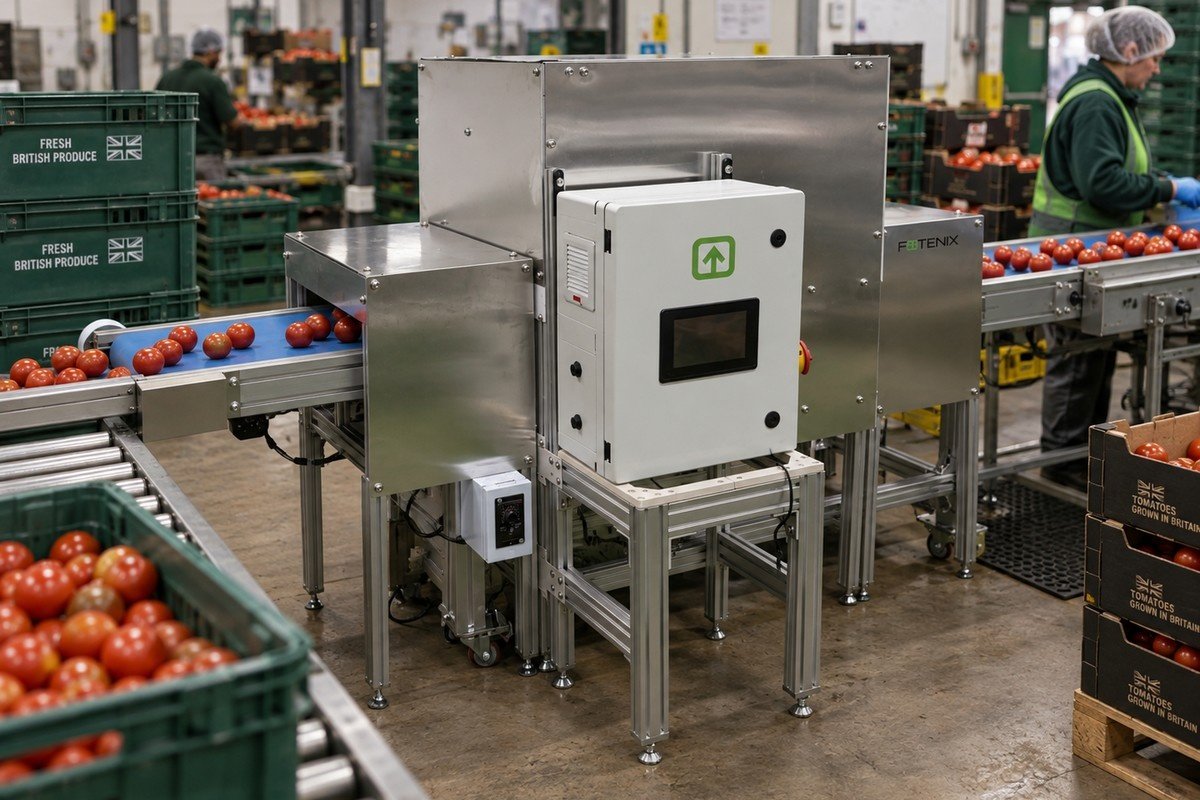
Automated tomato grading needs both a reliable inspection decision and a way to act on it. A QualiCrop trial brought multispectral quality checks and robotic handling together, highlighting the role of physical removal in determining line speed.
The consortium paired Fotenix’s Automated Quality Control system with Leap AI robotics. Tests ran from 27 to 29 July 2026 with tomatoes from APS Salads, using a separate pre-screening arrangement. The demonstration was an integration trial, with wider production-line installation still outside its initial scope.
Selecting wavelengths for quality inspection
Multispectral inspection measures reflected light in selected wavelength bands. This allows the equipment to look for patterns linked to damage, disease and mould, including changes that have yet to become obvious during a visual check.
The University of Lincoln’s detection work narrowed the required wavelength set from 400 to 18. The project recorded 87% accuracy when distinguishing healthy tomatoes from defective ones, using human sorting performance as the comparison. That result describes the project’s assessment rather than a guaranteed accuracy across crops or operating conditions.
The handling step sets the pace
Fotenix’s imaging technology can classify up to 4,000 items per minute in commercial applications. The combined robotic demonstration operated at approximately 200 items per minute. The trial ran at a reduced speed to show the complete inspection-and-removal sequence, with the robot’s physical handling becoming the limiting step.
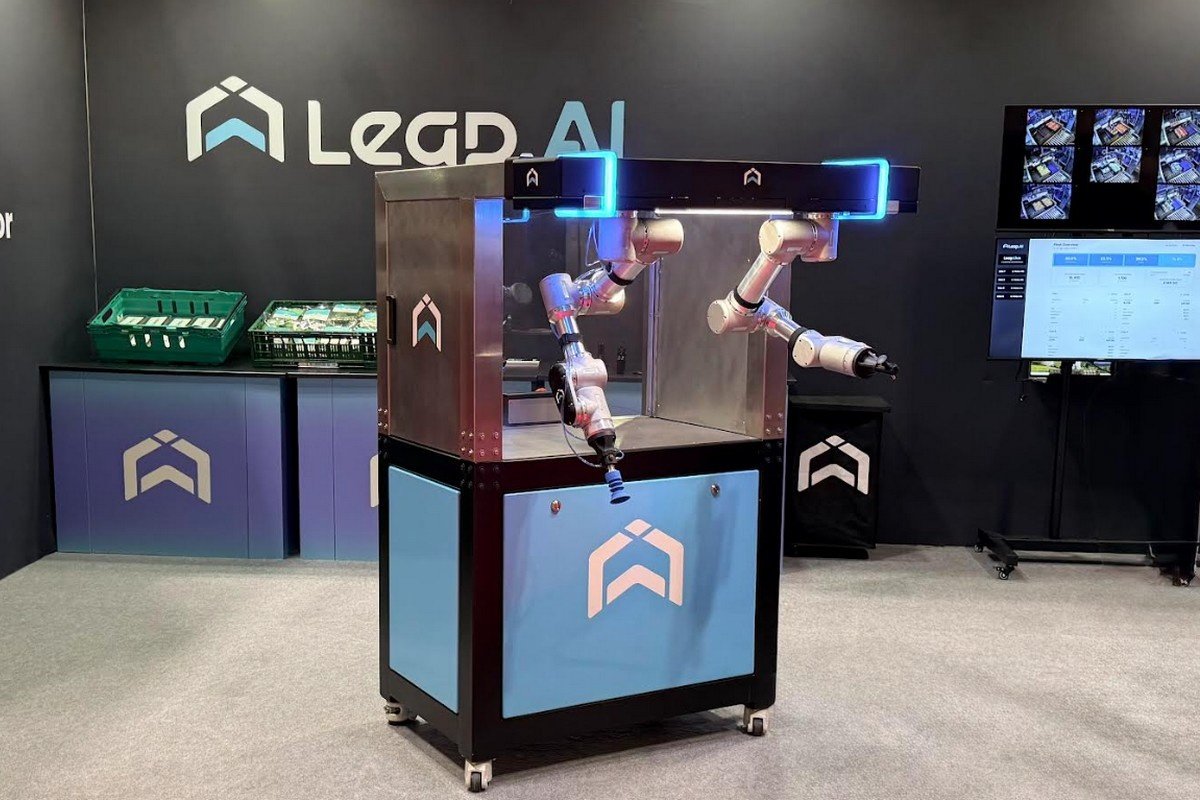
Those figures refer to different tasks and settings. For a packhouse considering automation, they show why camera throughput alone cannot establish the capacity of an integrated sorting line. Conveyor operation and the removal mechanism also shape the rate at which fruit can be processed.
A staged route into packhouse automation
QualiCrop focused on smaller and medium-sized UK greenhouse businesses covering three to 25 hectares. It explored adding spectral inspection and robotic removal without replacing the entire packhouse, in a market where optical sorting installations can exceed £1 million. The project does not establish a purchase price or payback period for the combined system.
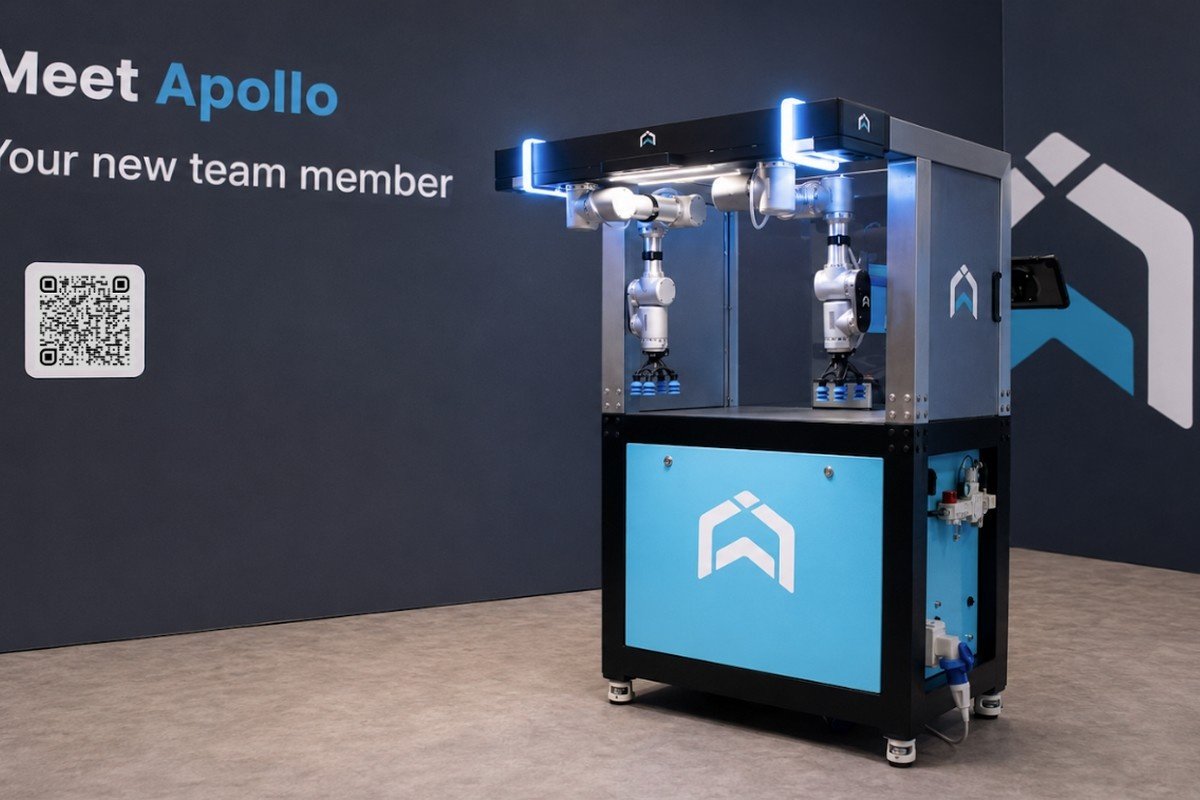
Inspection can also provide useful quality records before robotic removal is introduced. Comparing incoming fruit with the output of an existing sorting process could help operators understand variation between batches and assess where a further investment would be useful.
Connecting harvest quality with crop decisions
Fotenix’s longer-term ambition is to connect packhouse measurements with greenhouse records, helping growers examine how pest pressure and crop management affect harvested quality. This remains a broader company objective, separate from the specific QualiCrop demonstration.
Alongside the integration trials, the consortium produced imaging hardware, a spectral tomato dataset and machine-learning algorithms. Fotenix, Leap AI, the University of Lincoln and APS Salads participated, with support through the UK Farming Innovation Programme in partnership with Innovate UK.
