

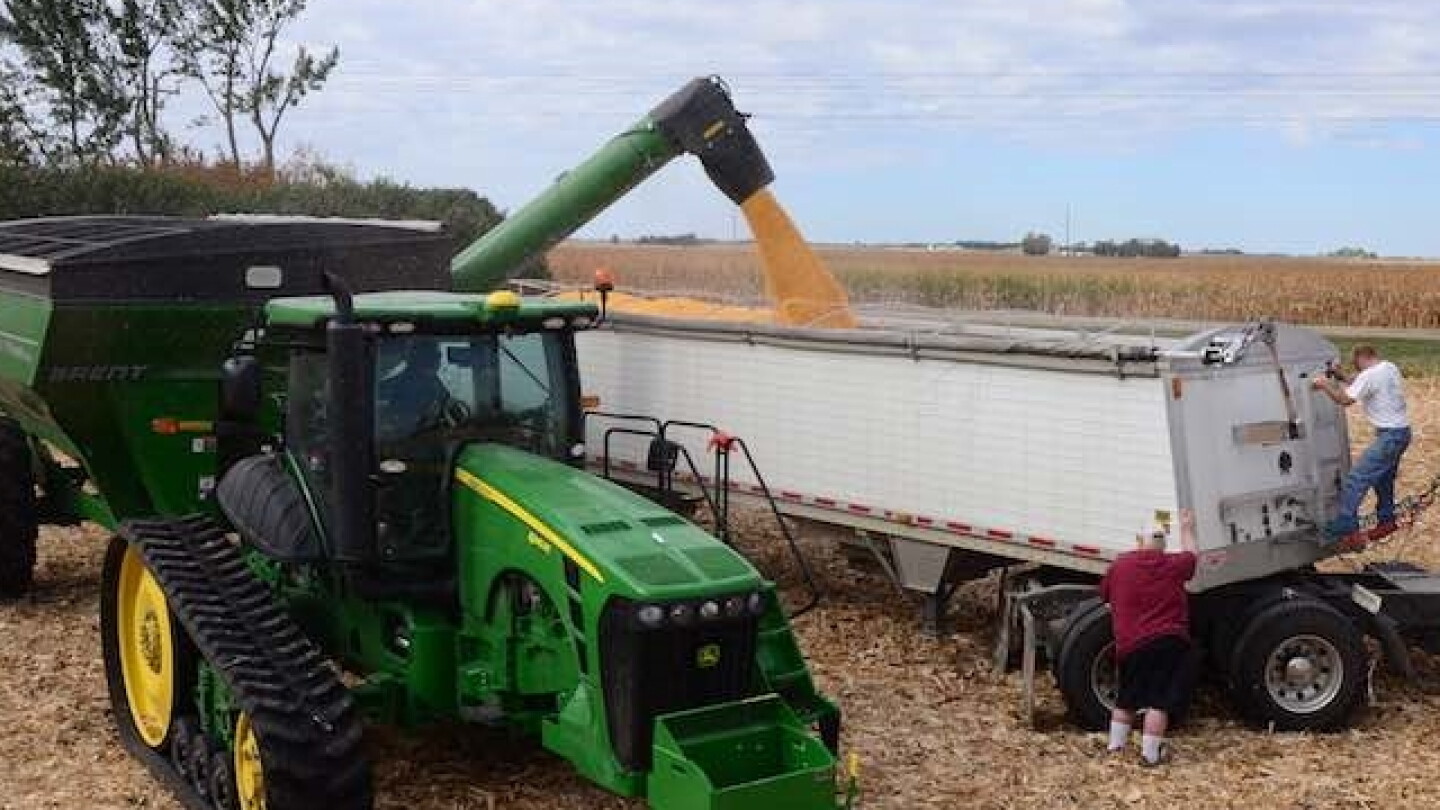
Soil damage from harvest traffic can remain after the last load has left the farm. Pressure from combines, grain carts and trucks compresses pore space, limiting the movement of air and water and making it harder for roots to explore the profile. Managing that risk begins with the condition of the soil and the way equipment moves across it.
Check whether the ground can carry the operation
Wet soil is particularly vulnerable because it deforms more easily under pressure. A simple hand assessment can help identify risky conditions: soil that smears or forms a ribbon when squeezed is less ready for traffic than soil that breaks into crumbs. The check should include entrances, low areas and turning zones, rather than relying only on the driest part of the field.
A short drying period may improve carrying capacity, although harvest urgency and crop condition also matter. Where the farm has a choice of fields, directing machinery towards firmer ground can protect wetter areas without stopping every operation. The important distinction is between a field that can be harvested and one that can be harvested without an unacceptable soil cost.
Manage axle load and surface pressure together
Part-loading a grain cart or truck reduces the weight imposed on each trip. Guidance discussed for marginal conditions suggests operating at roughly half to three-quarters capacity, while recognising that this can mean more journeys. The right balance depends on equipment configuration, axle loads, distance and whether those extra trips remain on designated routes.
Flotation tyres, dual wheels and tracks spread weight across a larger contact area and can reduce surface pressure. They do not remove the influence of a heavy axle on deeper layers. Tyre inflation should follow the manufacturer’s recommendations for the actual load and speed, so that the footprint matches the job rather than a habitual pressure setting.
Concentrate traffic where it does least harm
A traffic plan coordinates the combine, cart and road transport before the field becomes busy. Keeping repeated passes within a smaller area limits the proportion of soil exposed to machinery. This makes communication between operators valuable: a planned unloading route is easier to maintain than a pattern that emerges independently from each driver’s decisions.
Measure before committing to deep tillage
Ruts are visible, but the depth and extent of compaction need investigation. A penetrometer can compare trafficked zones with similar, less disturbed soil. Moisture affects resistance readings, so comparisons should be made under comparable conditions, ideally near field capacity. Several measurements are more informative than a single hard spot.
Where a compacted layer is confirmed, the result can guide whether corrective tillage is justified and how deep it needs to reach. Working below the necessary depth adds cost without automatically adding benefit. Prevention, supported by field observations, is the more durable way to protect the soil structure on which the following crop will depend.
