

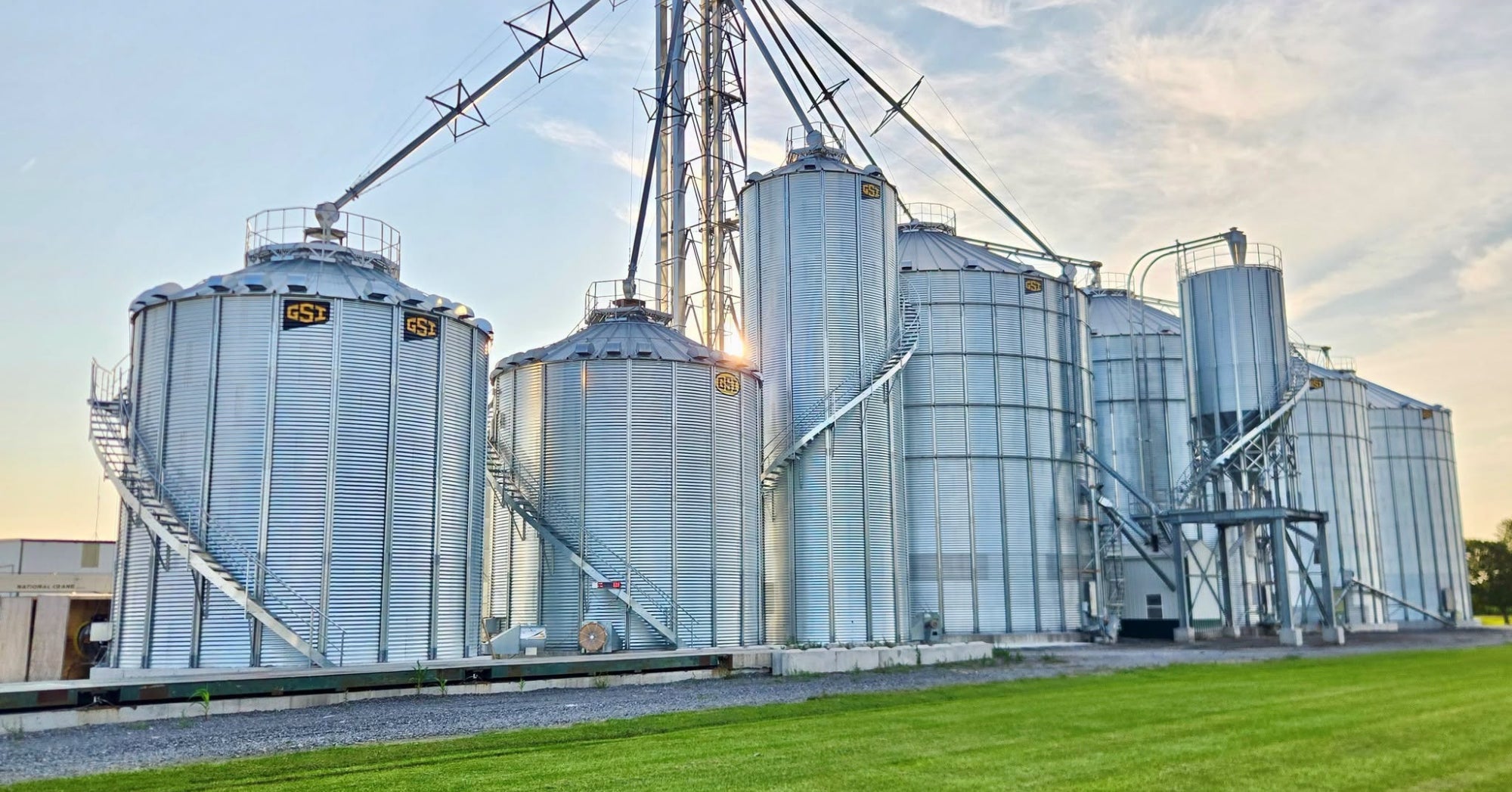
A grain system is more than a collection of bins. It is a sequence of receiving, moving, drying and storing material while keeping it in a condition that preserves its value. A bottleneck at any point can affect the whole operation. Reviewing what happened during harvest provides a clearer basis for improvement than starting with a decision to buy more equipment.
Start with the constraint that actually appeared
GSI’s post-harvest guidance connects storage planning with site access, material handling, grain condition and management technology. Automated tools such as GrainVue are intended to support monitoring and control, but the wider system still depends on the physical capacity and arrangement of the facility. The question is how those parts worked together under the demands of an actual harvest.
A queue of loaded vehicles may indicate limited receiving capacity, but it does not identify the cause on its own. The restriction could be farther along the handling process or associated with drying and available space. Following the path of the grain helps avoid adding capacity in a place that leaves the main constraint unchanged.
Capacity needs a workable layout
More storage is useful when material can reach it and move out again efficiently. Access routes, equipment positioning and the relationship between old and new parts of a site influence that movement. A planning decision should consider the busiest working periods, rather than only the amount of grain the bins could hold when the facility is otherwise quiet.
The same applies to future expansion. A new bin can solve an immediate shortage while making a later change harder if its location blocks access or complicates connections. Keeping a clear plan for the site helps the farm evaluate additions as parts of a system. It also makes the trade-offs between a small adjustment and a larger redesign easier to understand.
Observe the stored crop, not just the equipment
Monitoring provides information about the conditions under which grain is being stored. Its value depends on where observations are taken and how they are interpreted alongside airflow and the history of the material. A reading from one position cannot necessarily describe everything inside a bin. Understanding the arrangement of sensors is therefore part of understanding what the dashboard can tell the operator.
An alert should lead to an understandable check or response. If operators cannot tell what triggered it, they may spend time investigating the wrong part of the system or become less attentive to later notifications. Clear records and a consistent review process help turn monitoring from a collection of warnings into a useful part of storage management.
Automation needs a defined operating purpose
Automatic control can reduce repetitive work and help maintain a more consistent routine, but it still requires clear settings and oversight. The operator needs to know what a system controls, what information it uses and how to recognise a communication or equipment problem. Those arrangements matter as much as the convenience of accessing a dashboard remotely.
Post-harvest review is an opportunity to put those pieces together. Record where delays occurred, which observations were useful and which tasks repeatedly needed attention. Improvements can then be aimed at a defined problem. The result is a storage system whose capacity, information and operation support one another as the next crop moves from the field into the bin.
