

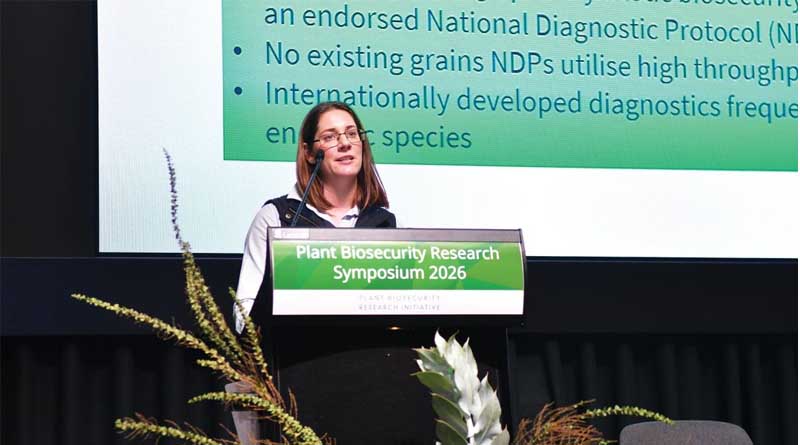
A suspicious insect or patch of diseased crop creates an immediate question for a grain grower: is this a familiar seasonal problem, or something that needs a different response? Faster identification can shorten that period of uncertainty and help specialists focus their attention where it matters most.
Build the diagnostic network before it is needed
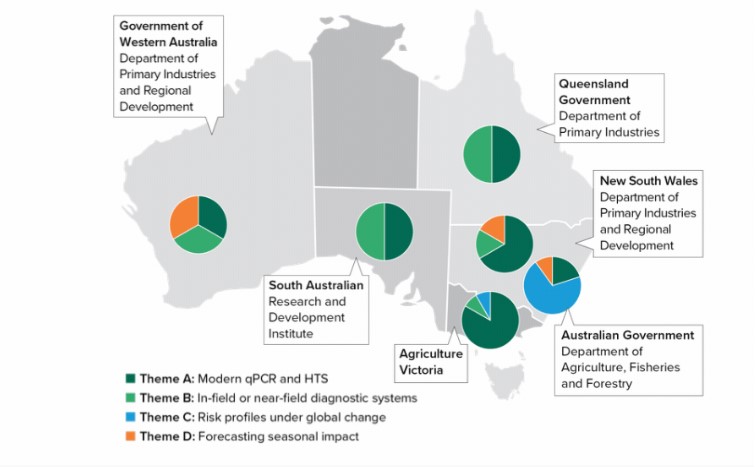
Australia’s National Grains Diagnostic and Surveillance Initiative combines laboratory development, near-field testing, risk analysis and seasonal forecasting. The five-year collaboration has a budget of A$54 million and involves GRDC, the national agriculture department and agricultural agencies in five states. Its purpose covers both threats from outside the country and pests or diseases already affecting local production.
That combination matters because an effective response needs more than one accurate test. Samples must reach the right people, methods must produce comparable results and information must move between regions. Relationships established during routine research can make coordination easier when an unusual detection requires rapid investigation.
Use molecular tools to narrow the uncertainty
One part of the programme develops diagnostic tools for 38 exotic and 30 established pests and diseases. Quantitative PCR can measure a targeted fragment of genetic material, supporting the detection of a particular organism. High-throughput sequencing takes a broader approach, examining large amounts of genetic material and potentially revealing several organisms in a mixed sample.
Insect and spore traps can supply material for these analyses, connecting observations in the growing environment with laboratory evidence. The two methods answer different questions, so their usefulness depends on the suspected threat and the sample being examined. A rapid result is most valuable when the collection and interpretation around it are equally dependable.
Bring identification closer to the crop
A second workstream aims to develop field or near-field identification systems delivering results in less than 48 hours for 15 exotic and 20 established species. These are development targets within the initiative, rather than a promise that every suspected pest can already be identified on every farm within that window.
The wider programme also examines how trade patterns and climate conditions change exposure to pests. Seasonal work includes forecasting diamondback moth and studying differences among pathogen populations. Together, these activities help explain not only what has been found, but where surveillance should look next and when pressure may increase.
Make observations useful across regions
Standardised testing procedures and shared findings can give plant-health teams a clearer national picture. For the grower, the practical contribution is careful observation and a useful sample history: field location, crop stage, symptoms and previous management all help specialists interpret a result. Precision begins with identifying the problem correctly.
