

An on-farm experiment becomes useful when its results influence what happens in the following season. Yield measurements matter, but so do the farmer’s explanation of the work, the cost of the inputs and the ability to sell the harvest. A crop-nutrition initiative in Kenya is bringing those parts of the decision into the same conversation.
Put the experiment inside a working farm
The African Plant Nutrition Institute’s OFE 2.0 initiative supports more than 200 farmers across Siaya, Kakamega, Embu, Meru and Machakos. Its approach uses farmer-led experiments to develop nutrient-management practices suited to local conditions. The field is both a production site and a place to test an idea, with the farmer contributing observations that may be missed by a yield total alone.
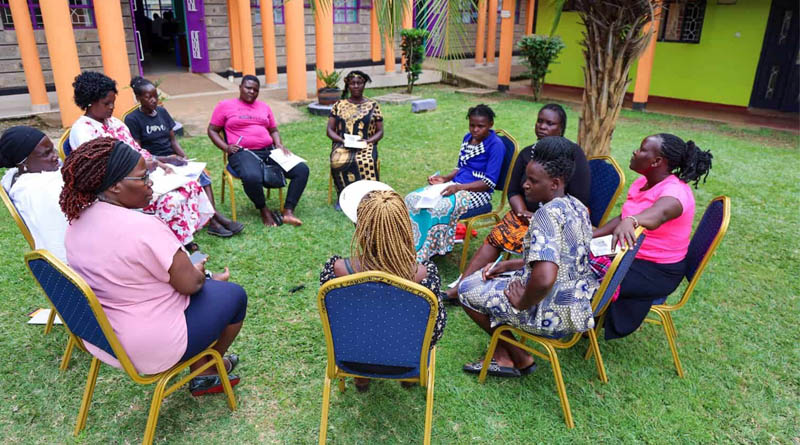
Post-harvest discussions bring those observations together with agronomic and socioeconomic analysis. Participants review the changes made, the technologies tried and the constraints encountered. The objective is to use the evidence to revise management plans, so that the next experiment or production cycle starts with a more informed question.
Ask what the improvement costs
Higher output does not automatically create a stronger business. The dialogues examine record keeping, gross margins, entrepreneurship and access to finance alongside crop-management results. This makes it possible to ask whether an approach generates enough additional value to cover its cost and whether the necessary inputs or services are available when the farmer needs them.
Market access is part of the same calculation. A production change may work agronomically but remain difficult to adopt if finance is unavailable, buyers are distant or advice arrives too late. By inviting researchers, extension teams, farmer organisations, financial institutions and agribusinesses, the process connects field performance with the wider conditions that determine its usefulness.
Build a service that can continue
Participants also use a Business Model Canvas to examine how farmer-centred experimentation could be sustained. The exercise considers the value offered, the partners and resources needed, implementation costs and the channels used to share information. This moves the discussion beyond an individual demonstration plot towards a service that farmers and supporting organisations can keep using.
The approach does not assume that a recommendation should transfer unchanged from one county to another. Instead, it creates a repeatable learning process: agree a question, collect field evidence, review the outcome with the farmer and plan the next step. The consistency lies in how decisions are tested, while the answer can remain specific to a particular farm.
For crop nutrition, that is a useful discipline. It keeps attention on the relationship between a management change and its measured consequences, while recognising that farmers operate within real financial and practical limits. Harvest then becomes the beginning of a better-supported decision rather than simply the end of a trial.
