

A farm can have a weather station, connected soil probes and satellite imagery without having a clear way to combine their information. Each tool may work well on its own, yet the person managing the crop still has to reconcile different readings, formats and recommendations. As artificial intelligence enters more agricultural products, making those systems work together becomes an increasingly practical challenge.
A common framework for agricultural AI
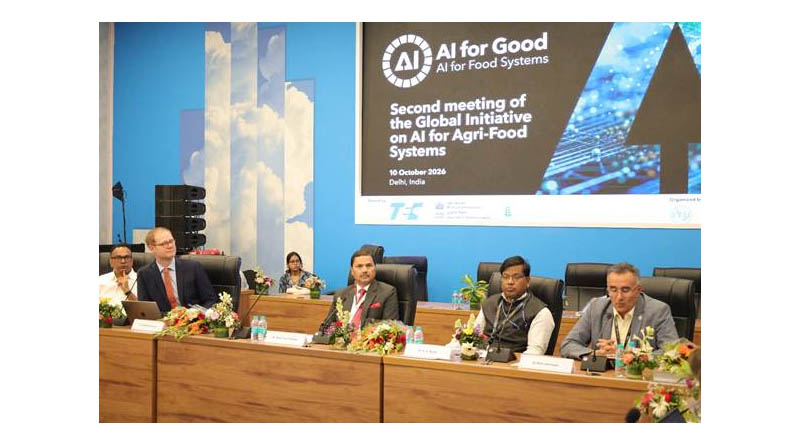
The Global Initiative on AI for Agri-Food Systems brought international organisations, researchers and technology developers together in New Delhi. Its programme linked connected sensors and digital farming applications with work on interoperability and responsible AI. A technology showcase also presented solutions developed through an agricultural hackathon. The emphasis was on translating technical development into tools that address real production problems.
For an individual farm, interoperability has a simple consequence: information collected for one purpose should remain useful elsewhere. A moisture reading used to plan irrigation might also help explain crop stress. Weather observations can provide context for a disease alert. If those records cannot be connected reliably, a grower has to repeat work or accept an incomplete picture of the field.
Measurements need context
Combining data requires more than placing numbers on the same dashboard. A system needs to know when a measurement was taken, where it came from and what it represents. Soil depth, units, sensor condition and the relationship between a station and a field can all affect interpretation. An algorithm cannot recover context that was never recorded, however sophisticated its calculations may be.
That makes the quality of the underlying observation an important part of AI development. Missing readings, inconsistent labels and equipment changes need to remain visible. Otherwise, a model may interpret a gap as a genuine change in conditions. Clear records help both software and people distinguish a developing crop problem from a problem with the measurement itself.
Testing the recommendation, not only the model
A promising demonstration shows that a tool can perform a task. Deployment asks a broader question: does the output remain useful when the crop, language, network connection or weather changes? Agricultural evaluation should connect the model’s performance with the decision it is intended to support. A technically accurate classification may still arrive too late or in a form that cannot be acted upon.
The user also needs to understand what remains uncertain. A recommendation based on incomplete observations should not look identical to one supported by a continuous record. Explaining the limits gives a farmer or adviser a chance to investigate, supply missing information or choose a different response. Confidence is useful only when it reflects the conditions under which the system actually works.
Making connected tools useful in daily work
Shared technical approaches can reduce the effort needed to move information between products, but adoption ultimately happens in a working farm. Installation, training, connectivity and ongoing maintenance remain part of the job. Systems that are easy to check and understandable to their users have a better foundation for sustained use than products that depend on a perfect operating environment.
The opportunity is to make a collection of digital tools behave like a coherent farming system. Sensors provide observations, communications move them and software helps interpret them. A common framework is valuable when it allows each part to support the others while keeping the grower’s actual decisions at the centre.
