

Weather Data vs.
Athlete Performance
at Milano Cortina 2026
High-resolution weather observations helped connect local wind, temperature and atmospheric conditions with athlete performance across Olympic venues.
The challenge
Performance changes with the environment
Winter competition takes place in exposed, fast-changing environments. A few degrees of temperature change can alter snow behavior, while wind speed and direction can affect balance, flight, pacing and tactical decisions. These effects are especially relevant in sports such as ski jumping, alpine skiing, cross-country skiing, biathlon and freestyle events.
Dense local observations
Weather stations placed close to competition areas captured site-level wind, temperature, humidity and pressure instead of relying only on broad regional forecasts.
Performance context
Environmental readings were aligned with competition windows so coaches and analysts could compare athlete results with the exact conditions present at the venue.
Actionable patterns
The combined dataset made it easier to identify when changes in wind or temperature coincided with shifts in pace, stability, trajectory or completion time.
What we learned
Weather data added a measurable layer to athlete analysis
The results were positive. Venue-level weather data helped explain performance variation that timing data alone could not. Wind was particularly important in events where aerodynamics and balance matter, while temperature and snow conditions influenced grip, glide and pacing.
Even in endurance disciplines, relatively small environmental changes can shape energy demand and race strategy. The value of the system was not in replacing coaching judgment, but in giving teams an objective environmental record to compare with what athletes experienced.
Behind the deployment
Capturing conditions directly at the Olympic venues
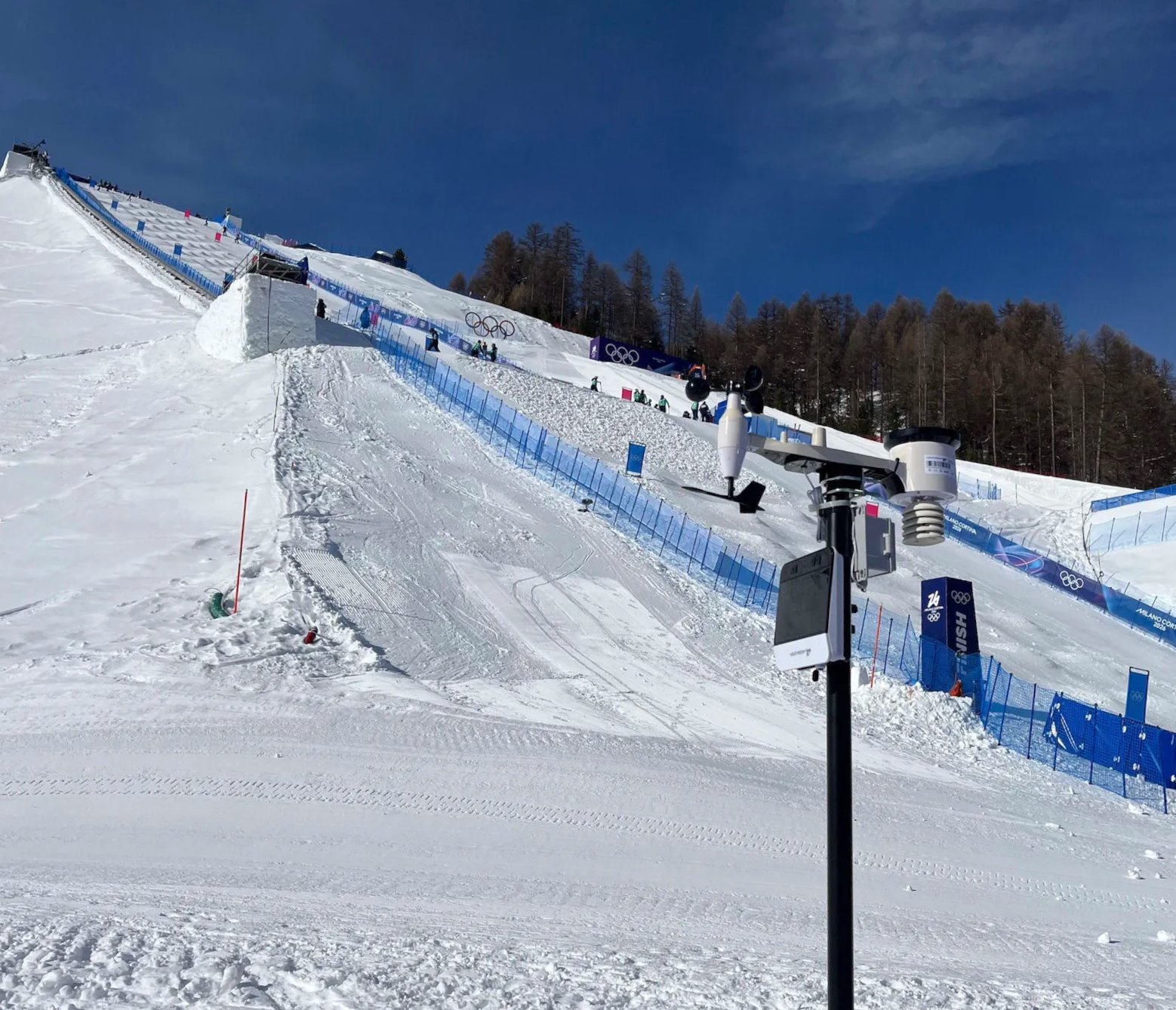
Pulse weather stations were deployed across Milano Cortina 2026 competition areas to capture the conditions athletes experienced in real time.
Positioned close to the action, the stations provided high-resolution measurements of wind, temperature, humidity and atmospheric pressure. This created a detailed environmental record that could be synchronized with competition and athlete performance data.
Next step
Build a larger evidence base at the next Olympic Games
The Milano Cortina deployment showed the potential of pairing athlete data with high-resolution environmental observations. Future research should expand the number of venues, increase sensor density and standardize how weather data is synchronized with performance metrics. A broader dataset at the next Games could help quantify sport-specific effects with greater confidence and support better preparation, equipment choices and race-day decisions.