

A changing climate can alter more than the timing of familiar farm jobs. It can also change which crops appear possible, which varieties remain dependable and how much protection a growing system needs. For Scotland, that brings an unusual combination of opportunities and uncertainties: new crops may become attractive even as the conditions supporting established ones become harder to predict.
New possibilities do not remove local limits
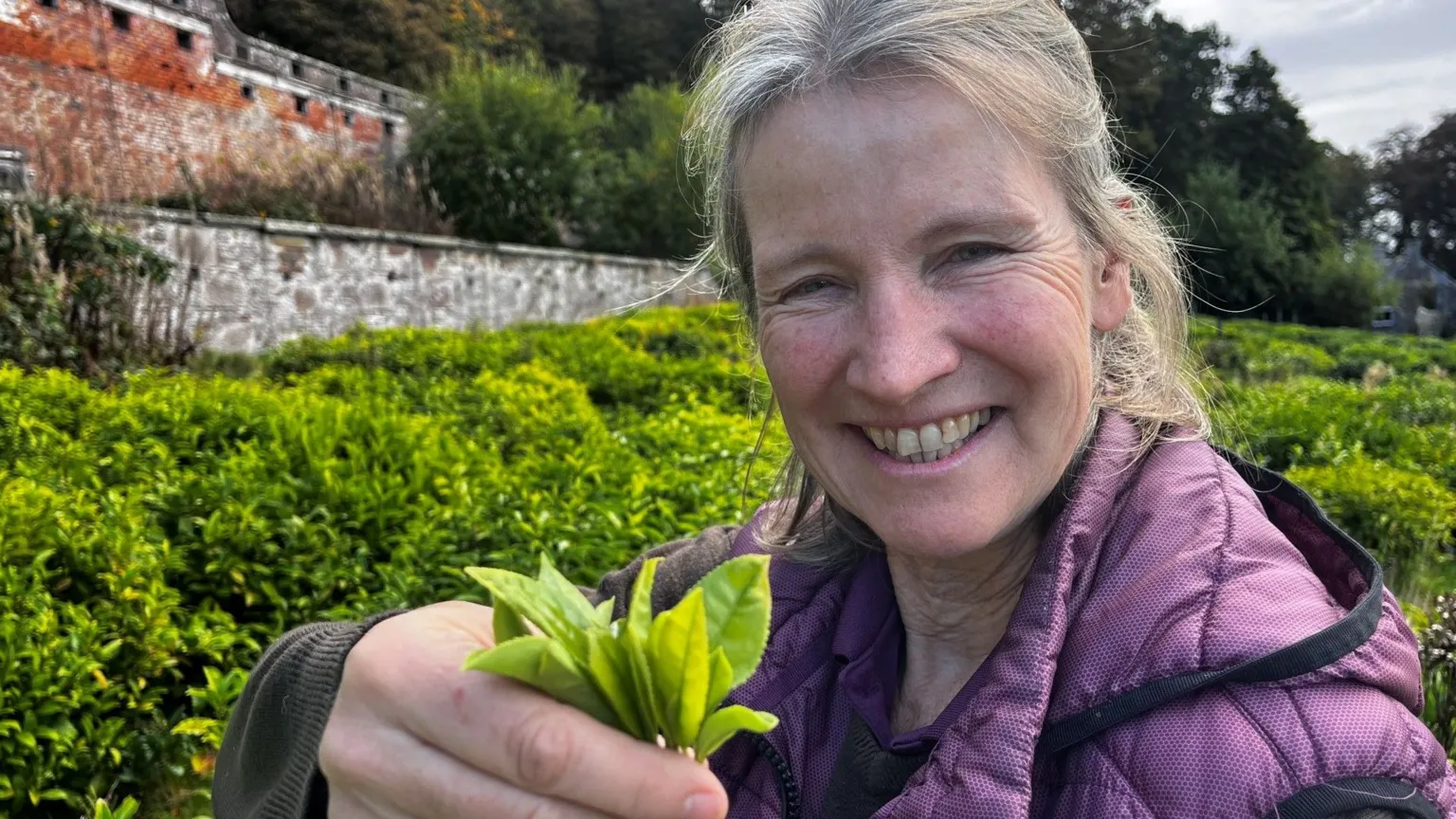
Small-scale tea growing near Forfar offers one example of diversification. At the James Hutton Institute, controlled plant-growth research examines how crops respond to different combinations of light, water and nutrients. These are distinct approaches to the same broader question: how can growers prepare for conditions that may differ from those on which their current businesses were built?
Growing a crop successfully once is an important first step, but it is not the same as establishing a dependable commercial system. Yield consistency, harvest timing, labour requirements and a market for the product all matter. A crop that suits a sheltered site may behave differently in an exposed field nearby. Regional potential has to be translated into decisions at the scale of the actual farm.
Testing combinations of stress
Controlled growing environments allow researchers to change conditions deliberately and observe the response. This is useful because crops rarely face one challenge in isolation. Temperature, water availability and the stage of development interact. Looking only for a variety that tolerates one extreme can miss how it performs when several pressures occur together or when a favourable period is followed by a difficult one.
Field evaluation remains essential alongside that work. Soil, wind, drainage and local management introduce variation that a controlled facility cannot reproduce completely. The strongest development process connects careful experiments with observations on working farms. That gives growers a clearer view of what a promising result can mean outside the conditions in which it was first achieved.
The role of protected cultivation
Glasshouses and other protected systems offer another route to broadening crop choice. They can provide greater control over conditions, but that control has a cost in equipment, energy and management. Comparing a protected crop with an outdoor alternative requires attention to the whole system, including how the product will be harvested, cooled, transported and sold.
Access to a different energy supply or a nearby customer can change that calculation. However, an appealing regional development does not guarantee the same economics for every farm. Trial areas, realistic budgets and a clear understanding of seasonal demand help keep an experimental crop from becoming an investment based only on its novelty.
Building an adaptation record
Local measurements can make diversification more informative. Recording weather, soil moisture, growth and harvest quality helps explain why one planting performed differently from another. A record becomes particularly useful when it spans both favourable and difficult seasons, rather than capturing only the year in which a new crop happened to thrive.
Scotland’s emerging crop experiments therefore matter beyond the unusual sight of tea leaves in a northern garden. They make adaptation tangible. The task for growers is to combine curiosity with evidence, testing new possibilities while retaining the practical knowledge that turns a crop into a sustainable part of a farm business.
